

Is your AI-generated flyer costing you customers?
by Peter Skitt, Creative Director of Buzz Design
If you’ve used an AI tool to make a poster, flyer or social media advert for your business, there’s a real chance it’s putting customers off. Two businesses have come to Buzz Design recently after trying exactly that, and in both cases the AI-generated flyers did more harm than good.
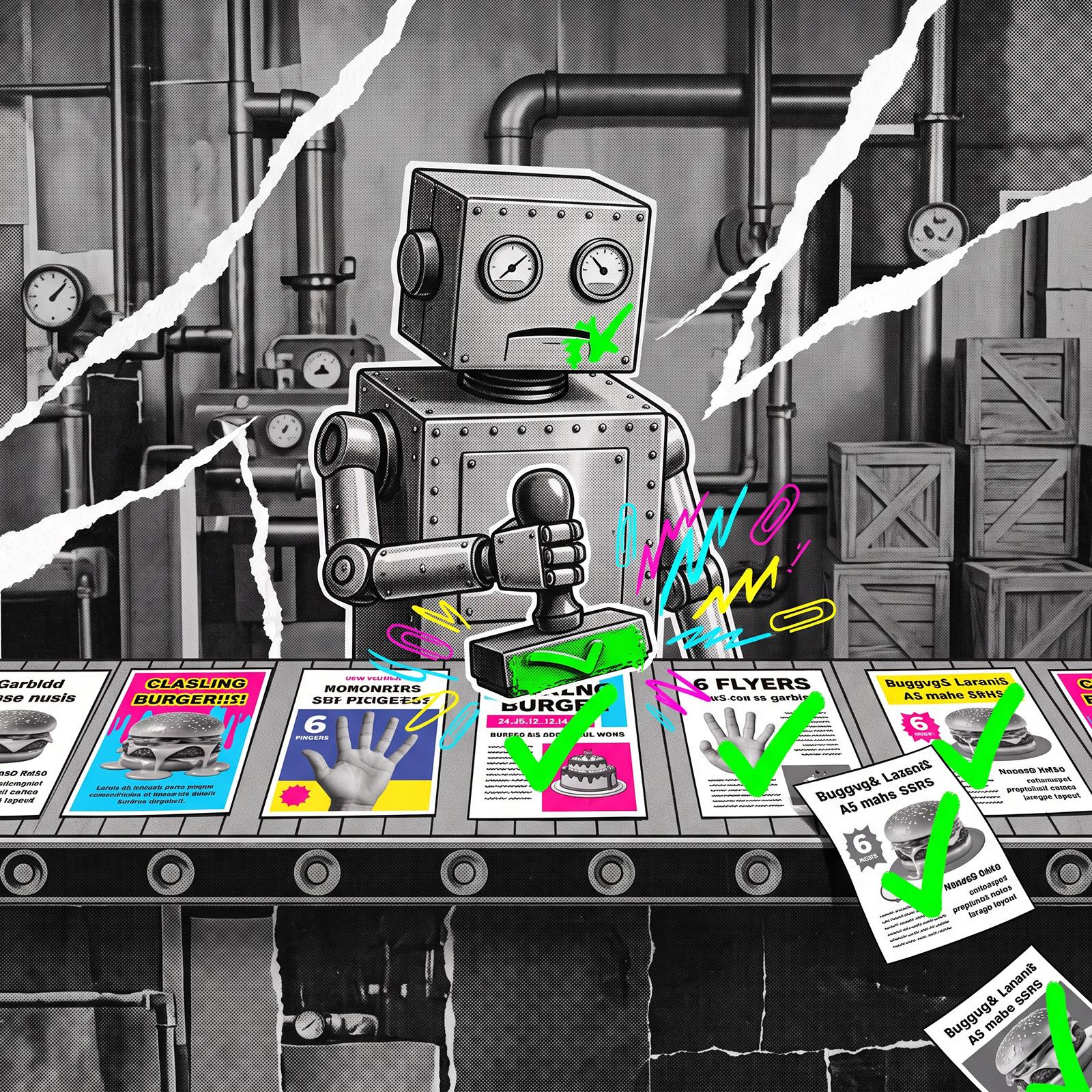
Here’s the bottom line. AI-generated marketing content costs you customers when people can tell it’s AI, and most people can. Unless the result is genuinely indistinguishable from the work of a designer, it tends to attract criticism rather than enquiries. The tools can be useful. Publishing their output unchecked is where businesses come unstuck.
I’ve worked in design and marketing since 1980 and founded Buzz Design in 1991. This is what I’ve seen, what the research says and what I’d do instead.
Two businesses, the same outcome
Neither business set out to cut corners. They’d seen what the new tools could do, produced posters in minutes and put them out.
The reaction wasn’t what they expected. People ridiculed the content publicly. Existing followers said they were disappointed the brand had turned to AI. Potential new customers went further, saying they actively avoid businesses that use these tools.
That last point hurts most. A poster exists to bring people in. In both cases it handed people a reason to stay away, and the owners came to us to put it right.
Why customers react so strongly to AI-generated adverts
People notice more than you think
Research from NielsenIQ found that viewers pick out AI-generated video ads quickly and rate them as more irritating and harder to follow than conventionally made ads. Even the polished examples left a weaker impression.
Knowing it’s AI changes the verdict
The Nuremberg Institute for Market Decisions (NIM) showed people identical adverts, some labelled as AI-generated and some as human-made. The “AI” versions came across as less natural and less useful, and people were less willing to look into or buy the products.
That matches what happened to those two businesses. The images weren’t the whole story. The moment people recognised them as AI, they started judging the business behind them.
The gap between the advertising industry and the public is widening, too. IAB’s 2026 research among US Gen Z and Millennial consumers found negative feeling towards AI-generated ads had risen 12 points since 2024. Consumers were twice as likely as ad executives to describe brands using it as manipulative.
Where AI tools help, and where they fall short
I’m not anti-technology. Over my career I’ve watched desktop publishing, digital photography, the web and social media each turn this industry upside down. Every one of those shifts made us better at the job once we worked out where it fitted.
We keep a close eye on AI tools at Buzz Design, so we know exactly what our clients can produce with them. Some of the output is impressive. The trouble is the distance between impressive and imperceptible.
A waxy sheen on the food. Lettering that dissolves into nonsense in the background. Hands with the wrong number of fingers. Once a customer spots any of it, they read the whole flyer as a shortcut, and a business that takes shortcuts in its marketing might take them elsewhere.
The responsibility stays with you
AI tools make mistakes, and they make them with total confidence. The Advertising Standards Authority is clear that its rules apply to adverts however they were produced. The business running the advert answers for what it says and shows.
If a generated image shows a product that doesn’t match what you sell, that’s a misleading advert with your name on it. Adding “made with AI” in small print won’t rescue it either. The ASA’s own guidance says disclosure alone is very unlikely to fix a misleading message.
The design basics that haven’t changed since 1991
The tools have changed beyond recognition since I started. The foundations haven’t moved, and they’re the same ones we apply to every graphic design project:
- A clear brief that sets out who the piece is for and what you want them to do next.
- One main message, with a hierarchy that makes people read the right thing first.
- Typography that stays legible at the size and distance it’ll actually be seen.
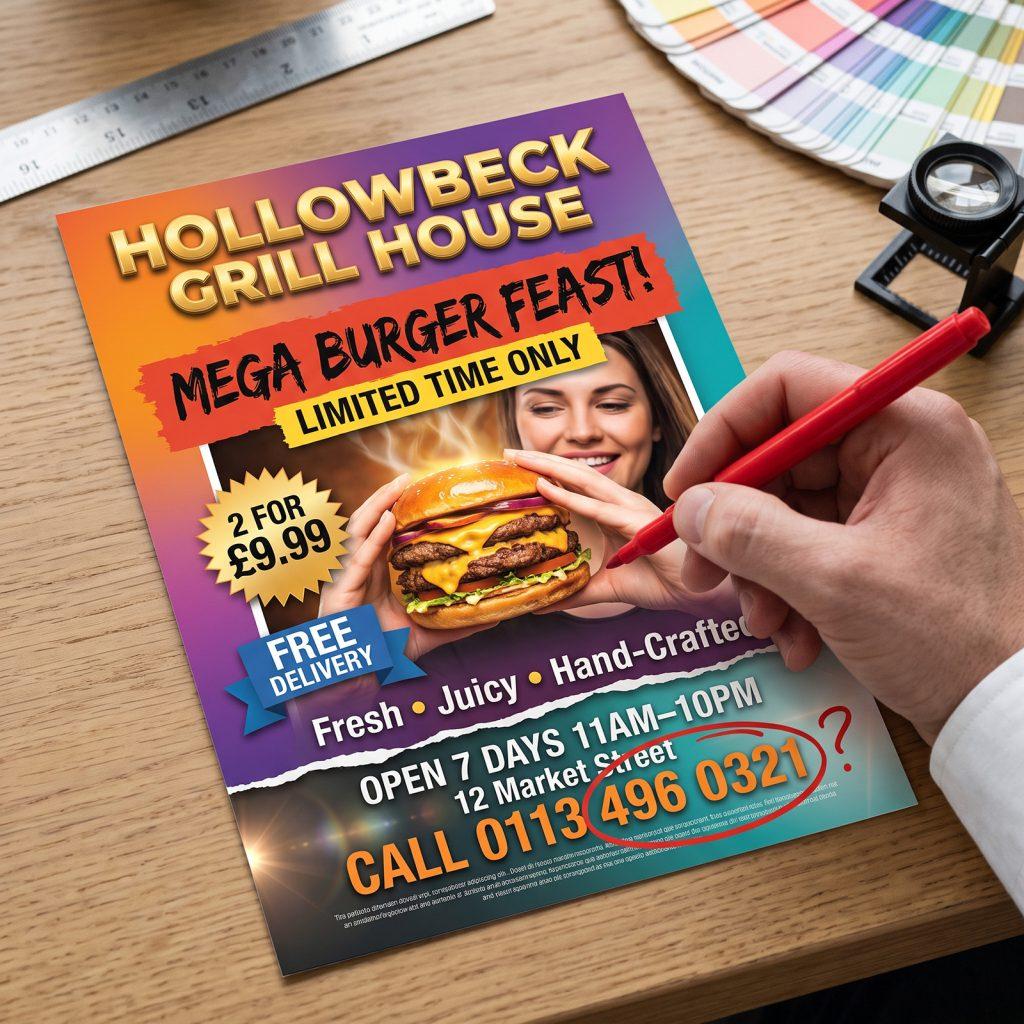
- A proper proofread of every phone number, price and opening time before anything goes to print or goes live.
None of that needs a big budget. It needs someone to think about the reader before they open the software. There’s more on how graphic design shapes your brand’s visual identity in our knowledge hub.
Before your next flyer goes out
Look at it the way a stranger would. Would they recognise it as AI at a glance? Does every image show something you actually sell or do? Has someone other than the person who made it checked every detail?
If the first answer is yes, or either of the others is no, hold it back.
Frequently asked questions on AI flyers
Want a second opinion on your marketing?
If you’ve already put AI-generated content out and the response wasn’t what you hoped, or you simply want the next piece right first time, talk to Buzz Design. Call us, email us, WhatsApp us, or fill in this form and we’ll get back to you shortly.